No products in the cart.
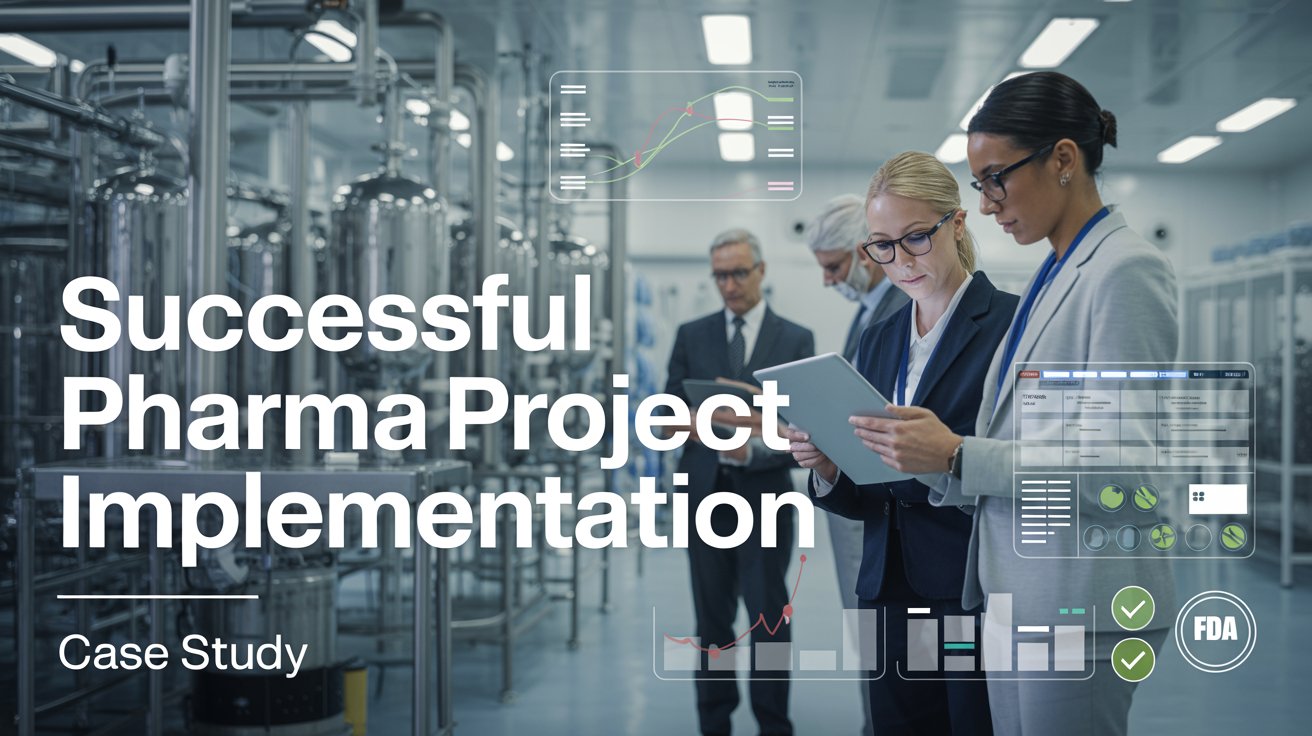
Case Study: Successful Project Implementation in a Pharma Setting
Introduction
In the pharmaceutical industry, where compliance, timelines, and precision define success, effective project implementation can make or break an organization’s reputation.
Every pharma project — whether it’s a facility upgrade, new product development, or validation program — demands meticulous planning, cross-functional coordination, and a clear understanding of regulatory frameworks.
In this case study, we’ll examine a real-world example of successful project implementation in a pharma setting, uncovering the key strategies, challenges faced, and lessons learned that helped deliver excellence — on time and within budget.
1. Background: The Project Overview
Client Profile
A mid-sized pharmaceutical manufacturing company based in India, with operations supplying formulations to global markets (USA, EU, and WHO), faced a critical challenge:
their manufacturing facility required an upgrade to meet new US FDA and WHO-GMP compliance requirements.
Project Objective
To successfully execute a facility validation and modernization project while maintaining continuous production and minimizing downtime.
Key Deliverables
- Upgrading HVAC and cleanroom systems to comply with WHO and FDA guidelines.
- Validating manufacturing and quality control processes.
- Implementing digital documentation (21 CFR Part 11 compliant).
- Ensuring zero regulatory non-compliance findings post-audit.
📊 Timeline: 14 months
💰 Budget: $1.2 million
👩💼 Team Size: 28 members (QA, QC, engineering, validation, and production teams)
2. Challenges Faced During the Project
Even well-planned pharma projects encounter obstacles. In this case, the team faced several key challenges:
A. Regulatory Complexity
The project had to meet multiple global standards — USFDA, WHO-GMP, and EMA guidelines, each with unique validation and documentation needs.
B. Cross-Functional Communication
Engineering, quality, and production teams operated in silos, causing delays in decision-making.
C. Limited Downtime Availability
With production ongoing, facility shutdowns for validation had to be meticulously planned to avoid revenue loss.
D. Change Management Resistance
Employees accustomed to legacy systems resisted the adoption of digital quality documentation systems.
E. Vendor Coordination
Managing multiple equipment and automation vendors led to scheduling conflicts and documentation delays.
💡 Insight: The most significant challenge in project implementation in a pharma setting is often not the technical aspect — but aligning people, processes, and compliance.
3. Strategy: Structured Project Management Approach
To ensure successful implementation, the company adopted a PMP-aligned project management framework, customized for pharma operations.
A. Project Planning & Scope Definition
A detailed Project Charter was created, defining:
- Scope of work and validation deliverables.
- Regulatory milestones and acceptance criteria.
- Risk matrix for audit readiness and process deviations.
B. Cross-Functional Core Team Formation
A Project Steering Committee was formed with leads from:
- QA & QC
- Engineering & Maintenance
- Regulatory Affairs
- Production & IT
This team met weekly to review progress and risks.
C. Gantt-Based Project Scheduling
Using Microsoft Project, a Gantt chart was developed to track timelines for:
- Equipment installation
- Validation protocols (IQ, OQ, PQ)
- Documentation approvals
- Final regulatory audit readiness
D. Risk Management
Potential risks — such as validation delays or audit findings — were mapped and mitigated with proactive measures.
E. Communication Plan
A clear reporting structure ensured real-time updates via dashboards and shared project logs.
4. Execution: Turning Plans into Action
Phase 1: Facility Design & Installation
- HVAC and cleanroom modifications executed per ISO 14644 standards.
- Real-time progress tracking via Power BI dashboards improved coordination.
Phase 2: Validation Activities
- All critical equipment underwent Installation, Operational, and Performance Qualification (IQ/OQ/PQ).
- Validation documentation was digitized, ensuring Part 11 compliance and traceability.
Phase 3: Training & SOP Implementation
- Over 120 employees were trained on new processes and documentation standards.
- Standard Operating Procedures (SOPs) updated to align with regulatory expectations.
Phase 4: Final Audit & Closure
- Internal mock audits conducted by QA.
- Third-party compliance consultants reviewed documentation.
- The facility passed the WHO and USFDA inspections with zero major observations.
💡 Result: The project was completed two weeks ahead of schedule and 5% under budget — a rare feat in complex pharma projects.
5. Key Success Factors
1. Strong Leadership and Governance
A dedicated project manager with PMP certification oversaw the entire implementation, ensuring accountability and timely decision-making.
2. Early Regulatory Engagement
Regulatory experts were involved right from the planning phase, aligning documentation and validation strategies with FDA expectations.
3. Use of Digital Tools
Power BI and Excel-based dashboards streamlined project tracking and resource allocation.
4. Effective Communication
Regular cross-functional meetings helped identify issues early and maintain momentum.
5. Continuous Training and Motivation
Change management workshops built employee buy-in for digital transformation.
6. Quantifiable Results
| Metric | Before Project | After Project | Improvement |
|---|---|---|---|
| Audit Readiness Score | 65% | 98% | +33% |
| Deviation Closure Time | 21 days | 10 days | 52% faster |
| Production Downtime | 12% | 5% | Reduced by 58% |
| Documentation Errors | 30 per audit | 5 per audit | 83% reduction |
| Regulatory Observations | 7 | 0 | 100% compliance |
📊 ROI: Estimated at 180% within 12 months due to improved operational efficiency and global market access.
7. Lessons Learned from the Project
- Cross-functional collaboration is non-negotiable in pharma.
- Early engagement with regulators prevents costly rework.
- Digitalization of documentation drastically reduces human error.
- Leadership buy-in is critical for employee acceptance of change.
- Continuous monitoring and internal audits ensure sustainable compliance.
💡 Takeaway: The success of project implementation in a pharma setting lies in balancing technical excellence with proactive leadership and communication.
8. Applying This Framework to Your Pharma Projects
If you’re planning a major initiative — like a GMP upgrade, technology transfer, or digital validation project — here’s a simplified roadmap inspired by this case:
Step 1: Define Clear Regulatory & Business Goals
Identify what success looks like — audit readiness, cost savings, or new market access.
Step 2: Build a Cross-Functional Project Team
Include QA, production, maintenance, and regulatory experts from day one.
Step 3: Use Digital Tools for Real-Time Tracking
Adopt dashboards (Power BI, Trello, or Asana) for transparency.
Step 4: Prioritize Risk and Change Management
Mitigate compliance risks before they escalate.
Step 5: Conduct Internal Mock Audits
Evaluate systems proactively before official inspections.
Quick Recap: Why This Case Study Matters
✅ Delivered 100% compliance with zero audit observations.
✅ Reduced downtime and documentation errors significantly.
✅ Strengthened collaboration between technical and regulatory teams.
✅ Proved that structured project management = measurable success.
👉 This case highlights that project implementation in a pharma setting requires equal focus on people, processes, and technology.
FAQs on Pharma Project Implementation
1. What makes pharma project management unique?
It combines strict regulatory compliance with operational complexity — unlike most industries, every decision must meet GMP and validation standards.
2. How long does a typical pharma implementation project take?
Most projects range from 6 months (for single system upgrades) to 24 months (for facility overhauls).
3. Which certifications help in pharma project implementation?
PMP®, Lean Six Sigma, and GMP compliance certifications strengthen project leadership skills.
4. How important is digital transformation in pharma projects?
Critical. Digital tools improve documentation, traceability, and audit preparedness.
5. Can these principles apply globally?
Yes — whether in India, the USA, Vietnam, or Nigeria, structured project management frameworks are universally effective.
Conclusion: Turning Pharma Projects into Success Stories
This case study proves that successful project implementation in a pharma setting is achievable with the right mix of leadership, structure, and collaboration.
When organizations invest in project management frameworks, digital transformation, and employee empowerment, they not only meet compliance standards but also unlock new opportunities for growth and innovation.
🚀 Call to Action:
Ready to drive success in your next pharma project? Explore our Pharma Project Management & Leadership Programs to learn frameworks that guarantee results.

