No products in the cart.
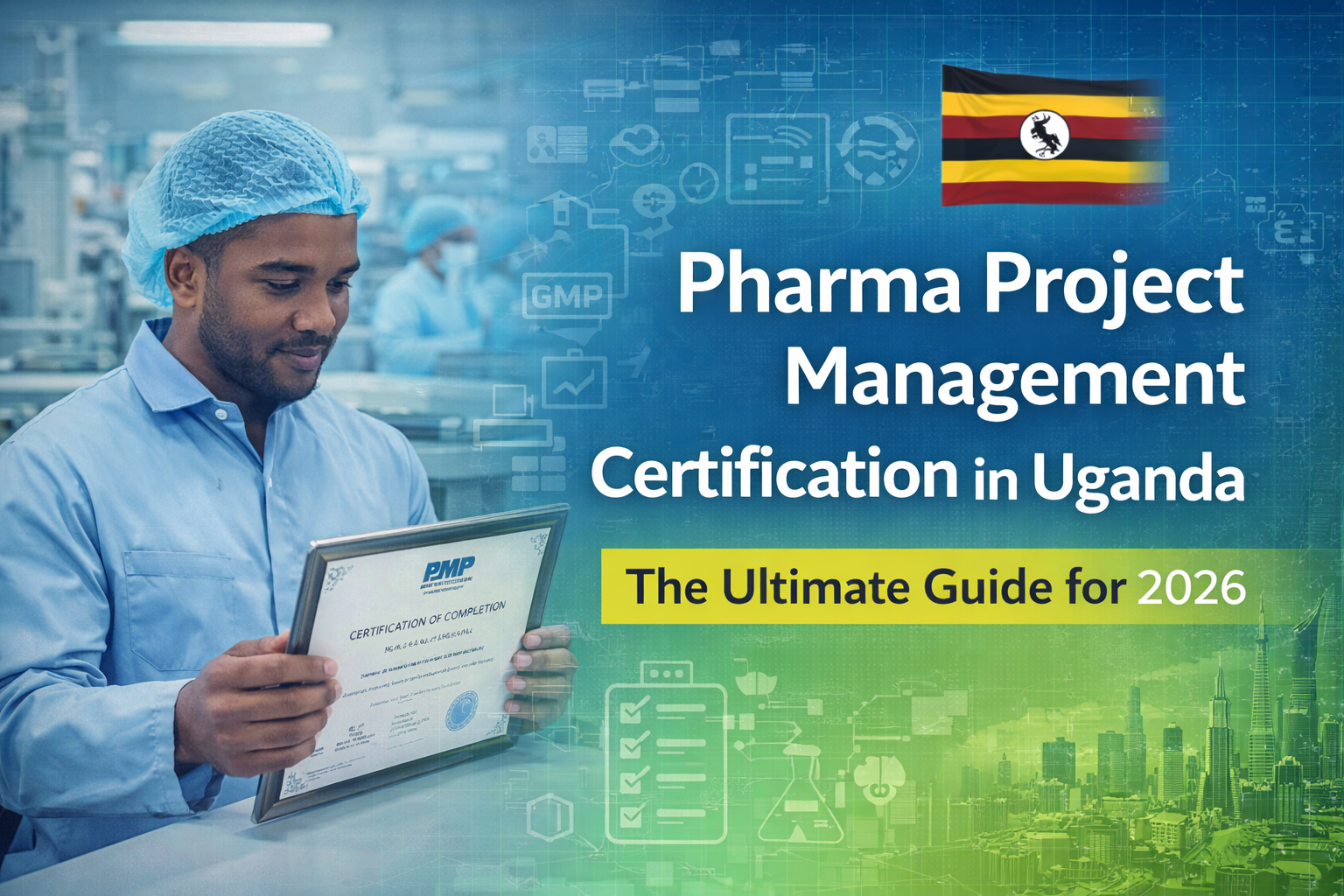
Pharma Project Management Certification in Uganda: The Ultimate Guide for 2026
Introduction: Why Project Management Is Becoming Critical in Uganda’s Pharma Industry
Uganda’s pharmaceutical industry is entering a new growth phase. With increased emphasis on local manufacturing, rising healthcare demand, stronger NDA Uganda regulations, and regional exports within the East African Community (EAC), pharma companies are executing more complex projects than ever before.
These include:
- New manufacturing facility setups
- WHO GMP upgrades
- HVAC, water, and equipment validation projects
- Technology transfers
- Digital quality system implementations
Yet, many pharma projects in Uganda still struggle with delays, cost overruns, regulatory observations, and coordination failures.
This is where Pharma Project Management Certification in Uganda becomes a game-changer.
In 2026, pharma professionals who combine technical knowledge with structured project management skills will lead the industry forward—and accelerate their own careers.
This guide explains:
- What pharma project management certification is
- Why it matters specifically in Uganda
- Career and salary benefits
- Who should pursue it
- How to choose the right certification
Understanding Pharma Project Management Certification
What Is Pharma Project Management?
Pharma project management applies standard project management principles—scope, time, cost, risk, and quality—within a highly regulated pharmaceutical environment.
It integrates:
- GMP compliance
- Validation lifecycle (DQ, IQ, OQ, PQ)
- Regulatory documentation
- Change control
- Audit readiness
A Pharma Project Management Certification in Uganda ensures professionals can manage projects without compromising patient safety or regulatory compliance.
How It Differs from Generic Project Management
| Generic Project Management | Pharma Project Management |
|---|---|
| Focus on timelines | Focus on compliance + timelines |
| Flexible documentation | Mandatory documentation |
| Low regulatory risk | High regulatory scrutiny |
| Business-driven decisions | Patient-safety–driven decisions |
Pharma-specific certification adapts global project frameworks to GMP realities.
Why Uganda’s Pharma Sector Needs Project Management Professionals
Uganda’s pharma industry faces unique challenges:
1. Rapid Industry Growth
- Increased local drug manufacturing
- Government support for local pharma
- Growing exports to EAC countries
2. Regulatory Maturity
- NDA Uganda aligning strongly with WHO GMP
- Stricter inspections and documentation expectations
3. Resource Constraints
- Limited experienced validation and project leaders
- Teams handling multiple responsibilities
4. Complex Compliance Projects
- Facility upgrades
- HVAC and water system validation
- Data integrity improvements
📊 Industry Insight:
Over 60% of regulatory observations in local pharma projects are linked to poor planning, weak documentation, or uncontrolled changes—classic project management failures.
This is why Pharma Project Management Certification in Uganda is becoming essential, not optional.
Top Benefits of Pharma Project Management Certification in Uganda
1. Faster Career Growth and Leadership Opportunities
In Uganda, many pharma professionals remain stuck in execution roles despite years of experience.
Certification helps professionals:
- Move into Project Lead roles
- Transition from QA/QC or Engineering into management
- Gain visibility with senior leadership
Employers prefer certified professionals because they:
- Reduce project risk
- Improve compliance outcomes
- Deliver predictable results
2. Strong Advantage in Regulatory Inspections
Certified project managers understand:
- How projects are audited
- How documentation is reviewed
- How changes must be controlled
They proactively build inspection-ready projects, reducing:
- NDA observations
- Rework
- Costly delays
This makes Pharma Project Management Certification in Uganda especially valuable in GMP-driven environments.
3. Higher Salary and Better Job Security
Certified pharma project professionals often enjoy:
- Higher compensation
- Faster promotions
- Greater job stability
💰 Estimated Impact:
Professionals with project management certification typically earn 20–35% more than non-certified peers in comparable roles.
In a growing but competitive market like Uganda, this financial edge matters.
4. Ability to Manage Complex GMP & Validation Projects
Pharma projects are not just technical—they are compliance-intensive.
Certification equips professionals to manage:
- Validation master plans
- Risk assessments
- Change controls
- Cross-functional teams
This reduces project stress and improves outcomes.
5. Global and Regional Career Opportunities
Uganda-based professionals increasingly work on:
- EAC regional projects
- WHO-funded initiatives
- Multinational pharma expansions
A recognized Pharma Project Management Certification in Uganda opens doors beyond national borders.
It also strengthens eligibility for:
- International consulting roles
- Overseas assignments
- Remote project coordination
6. Improved Cross-Functional Collaboration
Pharma projects involve:
- QA
- QC
- Engineering
- Regulatory Affairs
- Operations
Certified professionals learn:
- Stakeholder management
- Communication planning
- Conflict resolution
- Decision-making frameworks
This leads to smoother collaboration and fewer compliance issues.
7. Reduced Project Failures and Firefighting
Without structured project management:
- Scope keeps changing
- Deadlines slip
- Documentation is rushed
- Compliance gaps appear
Certification replaces firefighting with predictable execution.
Who Should Pursue Pharma Project Management Certification in Uganda?
This certification is ideal for:
- QA / QC Professionals
- Validation Engineers
- Manufacturing Supervisors
- Regulatory Affairs Executives
- Pharma Engineers
- IT & Digital Transformation Teams
If your role involves coordination, timelines, documentation, or audits, this certification will transform your effectiveness.
Common Challenges Faced Without Certification
🚫 Poor project planning
🚫 Weak risk assessment
🚫 Inadequate documentation control
🚫 Late QA involvement
🚫 Regulatory surprises during inspections
These issues cost time, money, and credibility.
What to Look for in a Pharma Project Management Certification Program
Choose a program that offers:
- Pharma-specific case studies
- WHO GMP and NDA alignment
- Validation lifecycle integration
- Practical tools (WBS, risk registers, dashboards)
- Mentorship from industry experts
Avoid purely theoretical programs with no pharma context.
How Certification Helps Uganda’s Pharma Industry as a Whole
When more professionals are certified:
- Projects are delivered faster
- Compliance improves
- Local manufacturing quality increases
- Export readiness strengthens
- Patient safety improves
Certification benefits both individuals and the industry.
FAQs: Pharma Project Management Certification in Uganda
Is PMP certification suitable for pharma professionals in Uganda?
Yes, especially when combined with pharma and GMP-specific applications.
How long does certification take?
Typically 6–12 weeks, depending on intensity.
Can fresh graduates pursue this certification?
Yes, early certification accelerates leadership readiness.
Is certification useful for small pharma companies?
Absolutely—structured project management reduces costly mistakes.
Conclusion: Why 2026 Is the Right Time to Get Certified
Uganda’s pharmaceutical industry is growing—but only professionals who evolve with it will lead the future.
Pharma Project Management Certification in Uganda equips professionals to:
- Lead compliant projects
- Advance into leadership roles
- Earn higher compensation
- Compete regionally and globally
In 2026, project management skills will separate operators from leaders.
🚀 Strong CTA
Ready to future-proof your pharma career?
👉 Enroll in a Pharma Project Management Certification Program designed for Uganda’s regulatory and industry realities—and position yourself as a leader in 2026 and beyond.

