No products in the cart.
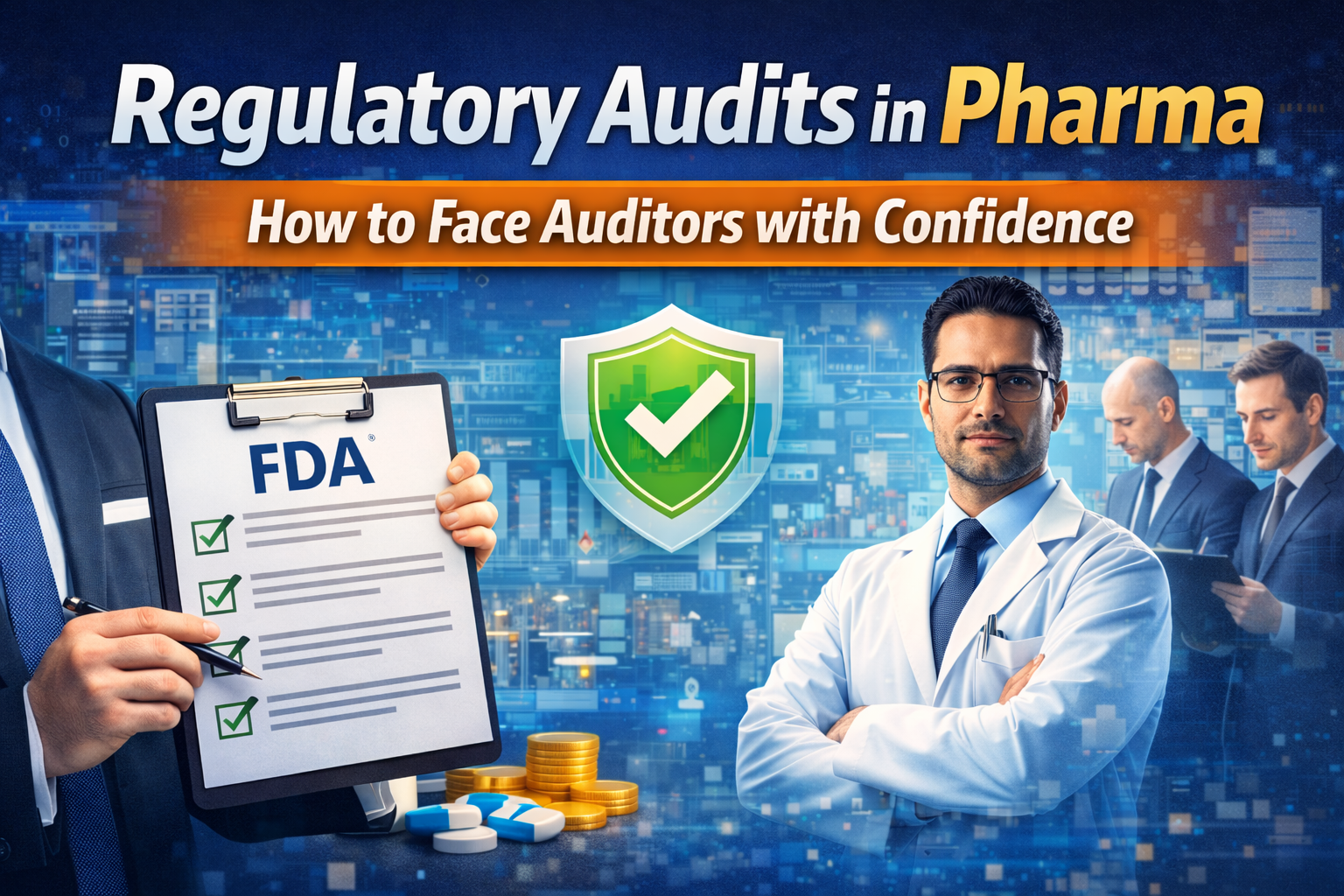
Regulatory Audits in Pharma: How to Face Auditors with Confidence & Ensure GMP Compliance
🚀 Introduction: Why Regulatory Audits Matter More Than Ever
In the pharmaceutical industry, regulatory audits are not just routine checks—they are business-critical events that can determine the future of your organization. Whether it’s a USFDA inspection, WHO audit, or internal GMP review, how your team performs under scrutiny directly impacts compliance, reputation, and revenue.
Yet, many pharma professionals still feel anxious about audits.
Questions like:
- “What if auditors find gaps?”
- “How do I answer confidently?”
- “What if documentation is incomplete?”
If this sounds familiar, you’re not alone.
The truth is—Regulatory Audits in Pharma are not about catching mistakes, but about demonstrating control, compliance, and confidence.
In this blog, you’ll learn:
- How to prepare for audits like a pro
- Practical strategies to face auditors confidently
- Real-world tips to avoid common audit mistakes
- How to build an audit-ready culture
🔍 What Are Regulatory Audits in Pharma?
Regulatory audits are systematic evaluations conducted by authorities (like USFDA, MHRA, WHO) to ensure that pharmaceutical companies comply with:
- cGMP (Current Good Manufacturing Practices)
- 21 CFR Part 11 (Data Integrity)
- Quality Management Systems
- Documentation & Validation Standards
These audits can be:
📌 Types of Audits
- Internal Audits – Conducted within the organization
- External Audits – By clients or third parties
- Regulatory Inspections – By authorities like FDA
⚠️ Why Most Pharma Professionals Fear Audits
Let’s be honest—audits can be stressful.
Common Reasons:
- Lack of preparation
- Poor documentation practices
- Fear of unexpected questions
- Weak understanding of GMP guidelines
- No structured audit strategy
👉 According to industry observations, over 60% of audit observations are due to documentation gaps and human errors, not technical failures.
🧠 Mindset Shift: Audit = Opportunity, Not Threat
Top-performing pharma companies treat audits as:
✔ A chance to improve systems
✔ A way to showcase compliance
✔ A validation of operational excellence
When you adopt this mindset, confidence replaces fear.
🛠️ How to Prepare for Regulatory Audits in Pharma
1️⃣ Build an Audit-Ready System (Not Last-Minute Preparation)
Audit readiness is not a one-day activity—it’s a continuous process.
Key Actions:
- Maintain real-time documentation
- Ensure SOPs are updated and followed
- Conduct periodic internal audits
📌 Many organizations now implement mock audits to simulate real inspection scenarios
2️⃣ Master Documentation (Your Biggest Weapon)
In pharma, if it’s not documented—it didn’t happen.
Ensure:
- ALCOA+ principles (Attributable, Legible, Contemporaneous, Original, Accurate)
- Proper version control
- No overwriting or backdating
💡 Tip: Always review your documents from an auditor’s perspective.
3️⃣ Train Your Team (Confidence Comes from Clarity)
A well-trained team is your strongest defense during audits.
Focus Areas:
- GMP basics
- Data integrity
- SOP understanding
- Role-based responsibilities
📌 Structured training programs and workshops help professionals confidently handle audits and compliance challenges
4️⃣ Conduct Mock Audits
Mock audits help identify gaps before regulators do.
Benefits:
- Simulates real audit pressure
- Improves response handling
- Identifies compliance gaps
5️⃣ Prepare a GMP Audit Checklist
Here’s a quick checklist:
✔ Documentation complete
✔ Equipment validated
✔ SOPs updated
✔ Training records available
✔ Deviations handled
✔ CAPA implemented
🎯 How to Face Auditors with Confidence
💬 1. Listen Carefully Before Answering
Never rush your answers.
✔ Understand the question
✔ Answer precisely
✔ Avoid over-explaining
🧾 2. Show Evidence, Not Assumptions
Auditors rely on data, not verbal claims.
✔ Always support answers with documents
✔ Use records, logs, and reports
🤝 3. Be Honest (Never Guess)
If you don’t know something:
❌ Don’t bluff
✔ Say: “I’ll check and get back to you”
📊 4. Stay Calm & Professional
Confidence comes from:
- Preparation
- Clarity
- Communication
🚫 5. Avoid These Common Mistakes
- Giving incomplete answers
- Arguing with auditors
- Hiding information
- Poor body language
📈 Real Example: Audit Failure vs Audit Success
❌ Scenario 1: Poor Preparation
- Missing batch records
- Untrained staff
- SOP deviations
➡ Result: 483 observations, warning letter
✅ Scenario 2: Audit-Ready Organization
- Updated documentation
- Trained employees
- Strong QMS
➡ Result: Zero critical observations
🔬 Role of Technology in Audit Readiness
Modern pharma companies use:
- Automation tools
- Data analytics dashboards
- Digital documentation systems
These tools reduce:
✔ Human errors
✔ Compliance gaps
✔ Audit risks
🎓 Why Upskilling Is Critical for Audit Success
The pharma industry is evolving rapidly.
To stay ahead, professionals must learn:
- GMP regulations
- Data integrity
- Project management
- Digital transformation
Programs like The Pharma Architect Master Class help professionals master:
- Regulatory audits
- GMP compliance
- Real-life case studies
- Audit handling techniques
💡 Pro Tips to Crack Any Pharma Audit
✔ Always be audit-ready
✔ Keep documentation clean & updated
✔ Train your team regularly
✔ Conduct mock audits
✔ Stay calm during inspections
✔ Focus on continuous improvement
❓ FAQ Section
Q1. What are regulatory audits in pharma?
Regulatory audits are inspections conducted to ensure compliance with GMP and regulatory guidelines.
Q2. How can I prepare for a pharma audit?
Focus on documentation, training, mock audits, and SOP compliance.
Q3. What is the biggest mistake during audits?
Lack of documentation and poor communication.
Q4. How to handle difficult audit questions?
Stay calm, be honest, and provide documented evidence.
Q5. Why is audit confidence important?
Confidence reflects control, competence, and compliance—key factors auditors evaluate.
🔥 Conclusion + CTA
Regulatory audits don’t have to be stressful or unpredictable.
With the right preparation, mindset, and training, you can turn every audit into an opportunity to showcase excellence.
If you truly want to:
- Master audits
- Build confidence
- Grow your pharma career
👉 It’s time to invest in structured learning and real-world exposure.
Explore The Pharma Architect Master Class and transform how you approach audits, compliance, and career growth.

