No products in the cart.
How to Crack the PMP Exam in First Attempt: Proven Step-by-Step Study Plan (2026 Guide)
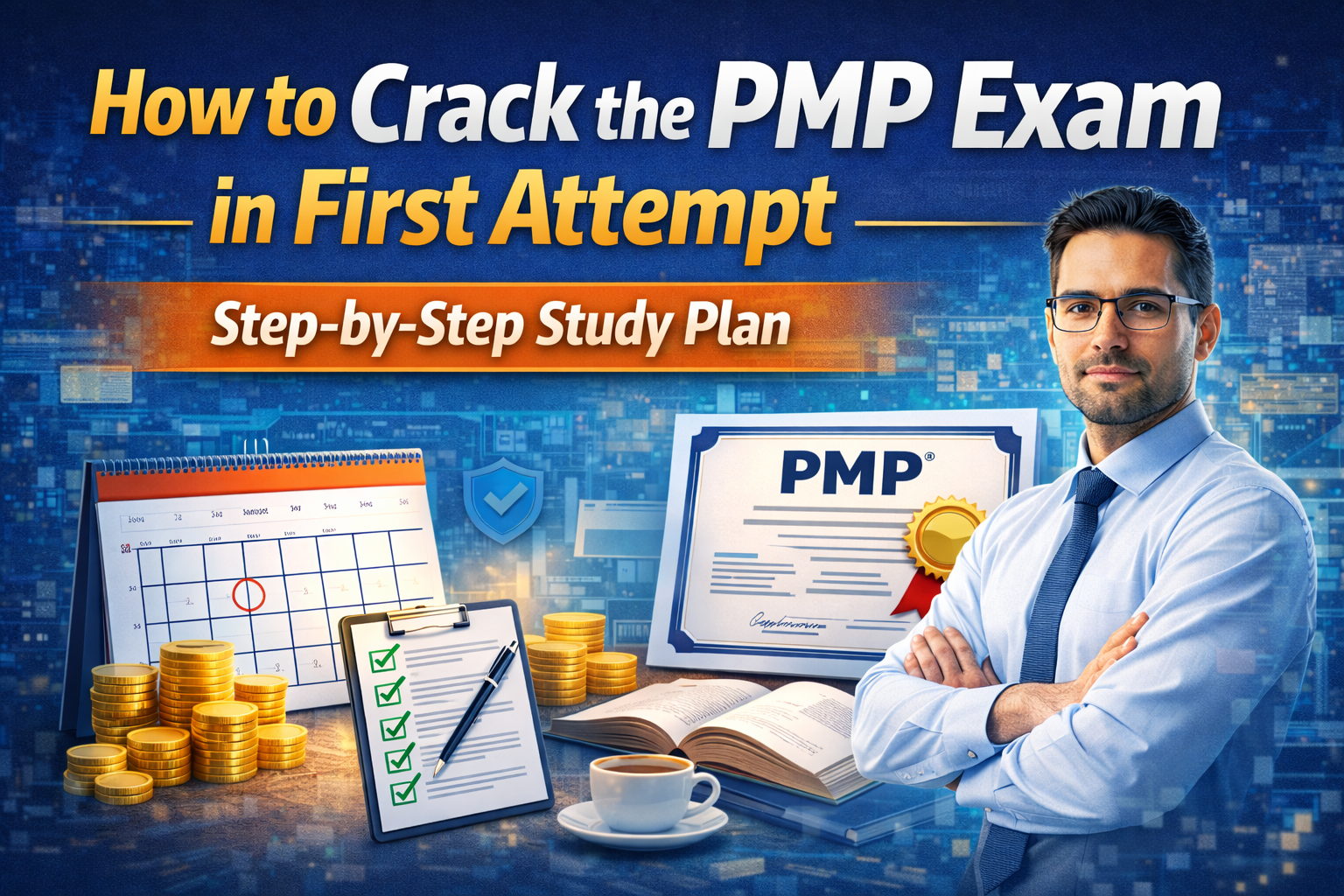
Cracking the PMP exam in the first attempt is not about luck—it’s about strategy, discipline, and the right guidance.
Every year, thousands of professionals attempt the PMP certification, but only those with a structured approach succeed on their first try. If you’re serious about advancing your career in project management, this guide will show you exactly how to crack PMP exam in first attempt with a practical, step-by-step roadmap.
Whether you’re a working professional or transitioning into project management, this blog will help you build a winning PMP strategy.
Why PMP Certification Matters in 2026
The Project Management Professional (PMP) certification is one of the most globally recognized credentials.
According to industry trends:
- PMP-certified professionals earn 20–25% higher salaries
- Demand for project managers is growing rapidly across industries
- PMP validates leadership, planning, and execution skills
As highlighted in the Skillup to Scaleup ecosystem, PMP is not just certification—it’s a career transformation tool backed by structured mentorship and real-world application .
Understanding the PMP Exam Structure
Before you prepare, you must understand the exam.
PMP Exam Format
- 180 questions
- Duration: 230 minutes
- Domains:
- People (42%)
- Process (50%)
- Business Environment (8%)
Types of Questions
- Situational questions (majority)
- Agile & Hybrid-based questions
- Predictive (traditional) project management
👉 Key Insight:
Most candidates fail because they focus on memorization instead of understanding scenarios.
Step-by-Step Study Plan to Crack PMP Exam in First Attempt
Step 1: Build a Strong Foundation (Week 1–2)
Start with the basics:
- Understand PMBOK 7 principles
- Learn Agile + Hybrid methodologies
- Focus on concepts, not definitions
Recommended Approach:
- Watch structured training videos
- Use simplified notes
- Focus on real-life examples
💡 Tip:
Avoid jumping directly into mock tests.
Step 2: Follow a Structured PMP Study Plan (Week 3–6)
A proper PMP study plan is critical.
Daily Study Routine:
- 2–3 hours per day
- Divide into:
- 1 hour concepts
- 1 hour practice questions
- 30 mins revision
Weekly Plan:
- Week 3–4: Process + Predictive
- Week 5: Agile + Hybrid
- Week 6: Integration + Revision
👉 Pro Tip:
Stick to one reliable training source instead of multiple scattered materials.
Step 3: Practice Scenario-Based Questions (Week 5–7)
The PMP exam is logic-based, not memory-based.
Focus on:
- Situational questions
- Decision-making scenarios
- Risk and stakeholder management
Practice Strategy:
- Solve 50–100 questions daily
- Analyze wrong answers
- Maintain an error log
💡 Golden Rule:
“Understanding why an answer is wrong is more important than why it is right.”
Step 4: Master Time Management (Week 7–8)
Time management is a major challenge.
Strategy:
- 180 questions → 230 minutes
- ~1.2 minutes per question
Mock Test Approach:
- Attempt full-length tests
- Simulate real exam environment
- Track:
- Accuracy
- Time per section
Step 5: Focus on Weak Areas
Identify patterns:
- Are you weak in Agile?
- Struggling with risk management?
- Confused in stakeholder scenarios?
Work on:
- Re-learning concepts
- Practicing targeted questions
Step 6: Final Revision Strategy (Last 7 Days)
Do NOT start new topics.
Focus on:
- Key concepts
- Notes revision
- Mock tests (2–3 full-length)
Last Week Checklist:
- Revise formulas
- Review Agile principles
- Go through mistake log
Top PMP Exam Preparation Tips (Expert Level)
Here are some advanced tips to crack PMP exam in first attempt:
1. Think Like a Project Manager
- Always choose the “best” answer, not the “correct” one
- Focus on leadership mindset
2. Eliminate Wrong Options
- Narrow down choices
- Improve accuracy
3. Understand Agile Deeply
- Scrum roles
- Iterations
- Servant leadership
4. Practice Real Exam Questions
- Use high-quality mock tests
- Avoid outdated materials
5. Stay Consistent
- Daily study > Weekend study
Common Mistakes to Avoid
❌ Studying without a plan
❌ Ignoring Agile concepts
❌ Overloading multiple resources
❌ Not practicing mock tests
❌ Skipping revision
Best PMP Certification Training (Recommended)
If you want to maximize your chances, structured training plays a huge role.
A high-quality PMP training program typically includes:
- Step-by-step study plan
- 1000+ practice questions
- Mock exams
- Personalized mentorship
- Application support
Programs like those under the Skillup to Scaleup initiative focus on:
- Real-world scenarios
- Practical project management
- Career support and interview preparation
👉 Explore the complete PMP training here:
https://gauravdakshini.com/courses/pmp-certification-training/
Sample 8-Week PMP Study Plan
| Week | Focus Area |
|---|---|
| 1–2 | Fundamentals + PMBOK |
| 3–4 | Predictive Processes |
| 5 | Agile + Hybrid |
| 6 | Integration + Practice |
| 7 | Mock Tests + Weak Areas |
| 8 | Revision + Final Prep |
Real-Life Example
Let’s say you get a question:
A stakeholder is unhappy with project progress. What should you do first?
Wrong approach:
- Escalate immediately
Correct approach:
- Understand concern
- Communicate
- Analyze root cause
👉 PMP tests mindset, not memory
FAQs
1. Can I crack PMP exam in first attempt without coaching?
Yes, but structured training significantly improves your chances.
2. How many hours should I study daily?
2–3 hours consistently for 6–8 weeks.
3. Is PMP exam difficult?
Moderately difficult—but manageable with the right strategy.
4. How many mock tests should I attempt?
At least 5–7 full-length tests.
5. Is Agile important in PMP?
Yes, a large portion of questions are Agile-based.
Conclusion: Your PMP Success Blueprint
Cracking the PMP exam in the first attempt is absolutely achievable—if you follow a structured, disciplined, and smart approach.
To recap:
- Build strong fundamentals
- Follow a clear PMP study plan
- Practice scenario-based questions
- Focus on time management
- Revise strategically
If you combine the right mindset with expert guidance, success is inevitable.
👉 Ready to accelerate your PMP journey?
Join a structured training program and take the fast track to certification.
Your trusted partner for pharma skills, systems, and solutions.

