No products in the cart.
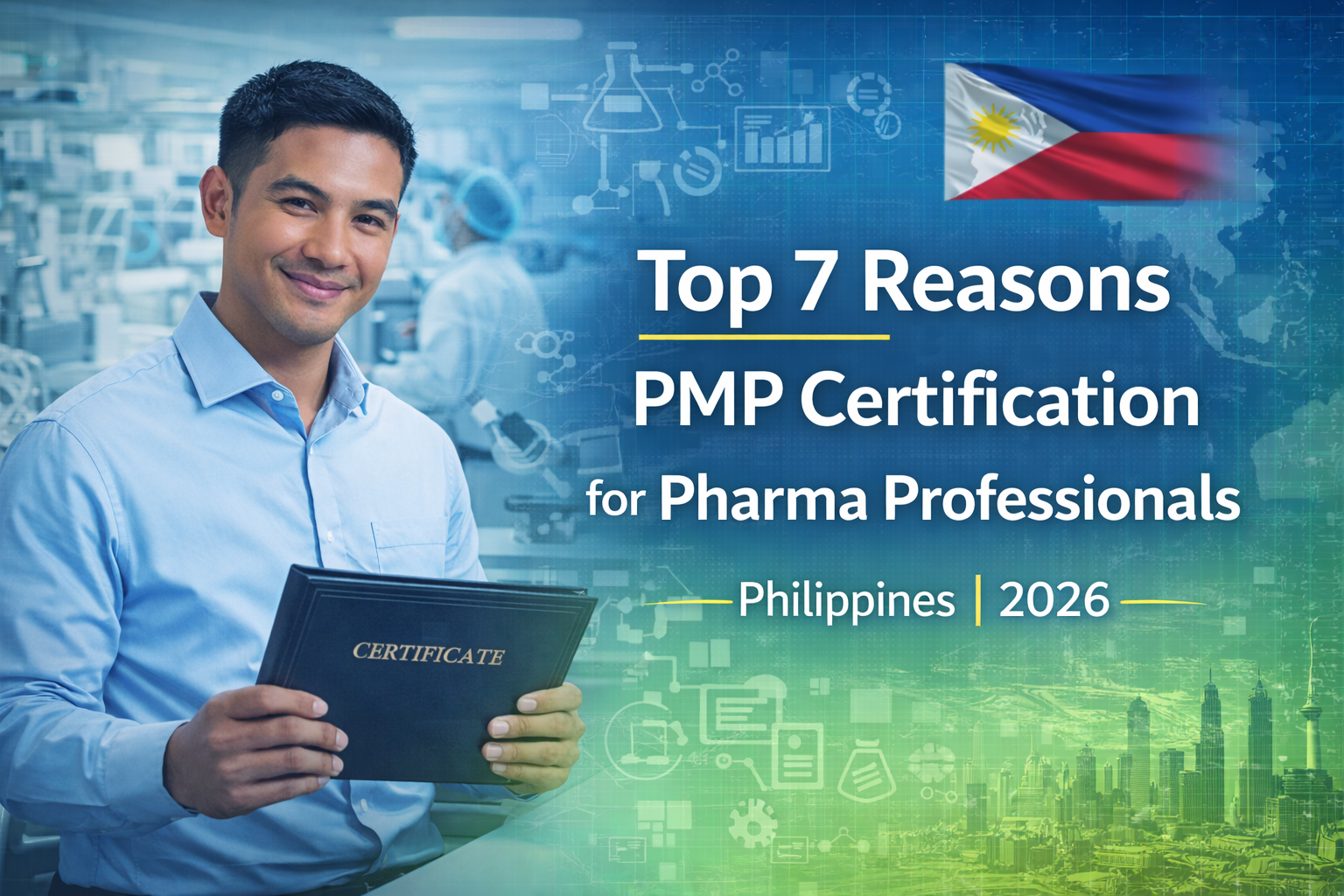
Top 7 Reasons Pharma Professionals in the Philippines Should Pursue PMP Certification in 2026
Introduction: Why PMP Is Becoming Essential for Philippine Pharma Professionals
The pharmaceutical industry in the Philippines is evolving rapidly. With stronger FDA Philippines regulations, increased participation in ASEAN pharma supply chains, and growing involvement in global projects, pharma professionals are expected to go beyond technical execution.
Today, success in pharma is no longer defined only by:
- GMP knowledge
- QA/QC expertise
- Regulatory experience
It is increasingly defined by how well you manage projects—from new product launches and facility upgrades to validation programs and digital transformation initiatives.
This is why PMP certification for pharma professionals in the Philippines is emerging as one of the most powerful career accelerators for 2026 and beyond.
In this article, we’ll explore seven compelling reasons why PMP certification is a strategic investment for Filipino pharma professionals looking to grow faster, earn more, and compete globally.
Understanding PMP Certification in the Pharma Context
What Is PMP Certification?
The Project Management Professional (PMP) certification, offered by PMI, is a globally recognized credential that validates expertise in:
- Project planning
- Risk management
- Stakeholder communication
- Budget and timeline control
- Leadership and execution
For pharma professionals, PMP provides a structured framework to manage projects in regulated environments without compromising quality or compliance.
When applied correctly, PMP certification for pharma professionals in the Philippines bridges the gap between technical expertise and leadership capability.
Top 7 Reasons Pharma Professionals in the Philippines Should Pursue PMP Certification in 2026
1. Faster Career Growth in a Competitive Pharma Job Market
The Philippine pharma job market is competitive. Many capable professionals remain stuck in execution roles due to lack of leadership credentials.
PMP certification helps professionals:
- Transition into Project Manager or Program Lead roles
- Gain visibility with senior management
- Stand out in internal promotions and external job applications
Employers view PMP-certified professionals as:
- Structured thinkers
- Low-risk leaders
- Capable of handling complexity
This is why PMP certification for pharma professionals in the Philippines directly accelerates career progression.
2. Higher Salary and Stronger Negotiation Power
One of the most tangible benefits of PMP certification is improved earning potential.
💰 Typical outcomes include:
- 20–40% salary increase
- Faster promotions
- Eligibility for regional and global roles
- Better leverage during salary negotiations
In an industry where margins and compliance matter, companies are willing to pay more for professionals who can deliver projects successfully.
3. Strong Advantage in Regulatory and Compliance-Heavy Projects
Pharma projects are frequently reviewed during:
- FDA Philippines inspections
- Client audits
- Internal compliance reviews
PMP-certified professionals understand:
- Risk-based decision-making
- Documentation discipline
- Controlled change management
- Inspection-ready execution
This reduces:
- Audit observations
- Rework
- Project delays
For organizations operating under FDA, WHO, or international standards, PMP-certified leaders are a major asset.
4. Global Career Opportunities Beyond the Philippines
Filipino pharma professionals are highly sought after globally due to their:
- Strong English communication
- Technical competence
- Adaptability
Adding PMP certification significantly increases access to:
- Multinational pharma projects
- ASEAN regional roles
- Remote project management positions
- Overseas assignments
A globally recognized PMP credential ensures your skills are portable and internationally respected.
5. Better Control Over Complex Pharma Projects
Pharma projects involve multiple stakeholders:
- QA
- QC
- Engineering
- Regulatory Affairs
- Operations
- Vendors
Without structured project management, projects often suffer from:
- Scope creep
- Timeline slippage
- Budget overruns
- Compliance gaps
PMP certification introduces tools such as:
- Work Breakdown Structures (WBS)
- Risk registers
- Stakeholder management plans
- Earned Value Management (EVM)
These tools transform chaos into control.
6. Smooth Transition from Technical Roles to Leadership
Many pharma professionals struggle when moving from technical roles to managerial positions.
PMP certification builds:
- Leadership confidence
- Communication skills
- Decision-making frameworks
- Stakeholder alignment capability
This is especially valuable for:
- QA/QC professionals
- Engineers
- Validation specialists
- Regulatory executives
With PMP, leadership becomes a skill—not a trial-and-error process.
7. Alignment with Digital Transformation & Pharma 4.0
The pharma industry is rapidly adopting:
- Digital QMS
- Automation
- Data analytics
- AI-enabled systems
PMP-certified professionals are better equipped to:
- Lead digital initiatives
- Manage change resistance
- Align innovation with compliance
📊 Stat:
Organizations with strong project management maturity are 28% more successful in digital transformation initiatives.
This makes PMP certification for pharma professionals in the Philippines future-proof for 2026 and beyond.
Who Should Pursue PMP Certification in the Philippines?
PMP certification is ideal for:
- QA / QC professionals
- Validation engineers
- Manufacturing supervisors
- Regulatory affairs executives
- Pharma IT and digital teams
- Professionals aspiring to leadership roles
If your role involves planning, coordination, deadlines, or audits, PMP is highly relevant.
Common Myths About PMP Certification
❌ “PMP is only for IT or construction”
❌ “It’s too theoretical for pharma”
❌ “Only senior managers need PMP”
✅ Reality:
PMP is industry-agnostic and highly effective when applied to pharma projects.
How to Prepare for PMP as a Pharma Professional
Best Practices
- Choose pharma-relevant PMP training
- Map PMP concepts to GMP projects
- Practice real-world case studies
- Combine PMP with regulatory knowledge
Avoid generic programs that ignore pharma realities.
FAQs: PMP Certification for Pharma Professionals in the Philippines
Is PMP certification recognized in the Philippines?
Yes. PMP is globally respected and increasingly valued by pharma employers.
How long does PMP preparation take?
Typically 8–12 weeks with structured study.
Can fresh professionals pursue PMP?
Yes, provided they meet PMI eligibility criteria.
Is PMP useful for regulatory roles?
Absolutely. PMP strengthens compliance project execution.
Conclusion: Why 2026 Is the Right Time to Get PMP Certified
The pharma industry in the Philippines is becoming more regulated, more global, and more project-driven.
Professionals who combine technical expertise with structured project leadership will dominate leadership roles in the coming years.
PMP certification for pharma professionals in the Philippines is not just a credential—it’s a strategic career investment for 2026 and beyond.
🚀 Strong CTA
Ready to accelerate your pharma career?
👉 Enroll in a PMP Training Program designed for Pharma Professionals and position yourself for leadership, higher income, and global opportunities in 2026.

