No products in the cart.
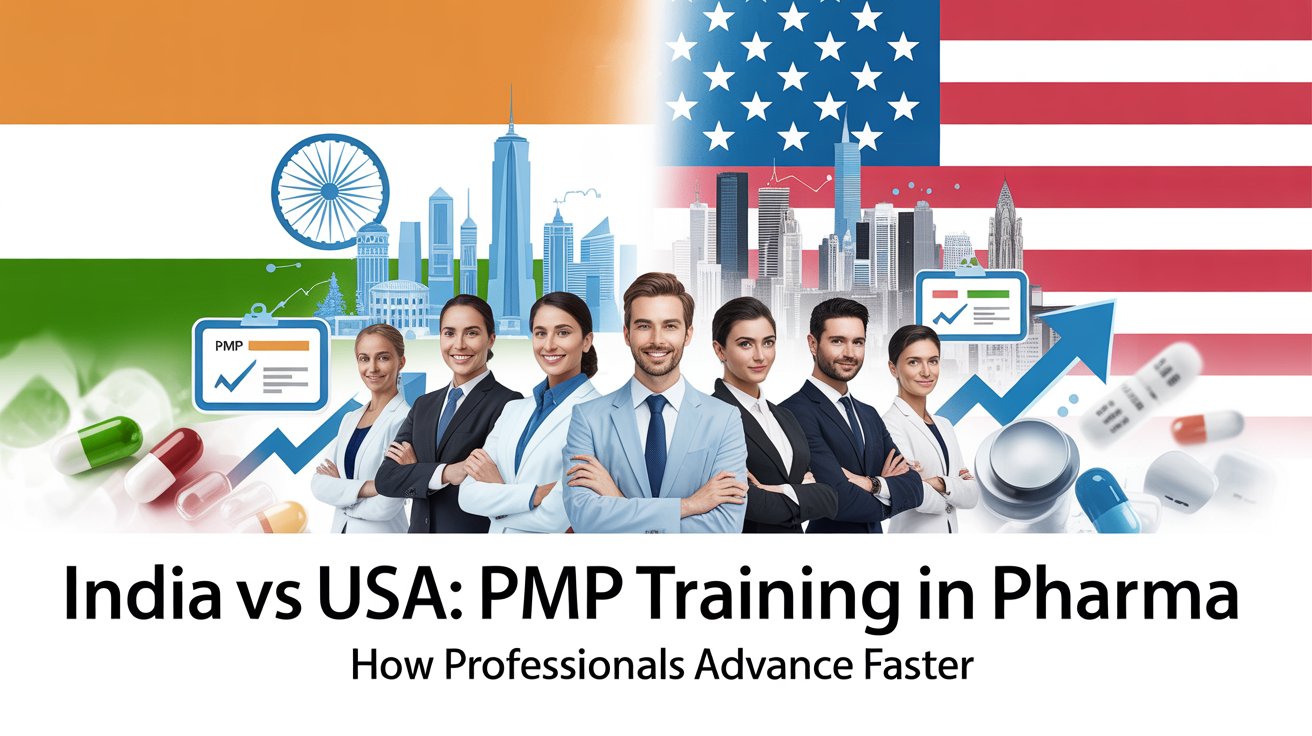
India vs USA: How PMP Training Helps Pharma Professionals Advance Faster
Introduction
In today’s global pharmaceutical industry, where projects range from clinical trials to manufacturing scale-ups and regulatory submissions, success depends on one key skill: effective project management.
Pharma companies in both India and the USA are realizing that structured management practices—rooted in frameworks like Project Management Professional (PMP®)—are essential for efficiency, compliance, and innovation.
But how exactly does PMP training help pharma professionals advance faster in both countries? And how do the benefits differ between India’s dynamic generics market and the USA’s regulated pharma ecosystem?
Let’s explore.
1. Why PMP Training Matters in Pharma
The Complexity of Pharma Projects
Pharma projects aren’t like typical business projects. They involve:
- Cross-functional coordination (QA, R&D, manufacturing, regulatory).
- Strict timelines for clinical trials and submissions.
- Regulatory scrutiny from agencies like FDA, EMA, WHO, and NAFDAC.
Without structured project management, delays and compliance gaps can cost millions.
That’s why PMP training for pharma professionals is no longer optional — it’s a strategic career accelerator.
📊 According to PMI (Project Management Institute), PMP-certified professionals earn 20–25% higher salaries globally and are more likely to hold leadership roles.
2. The PMP Advantage for Pharma Professionals
Key Benefits:
- Better Time & Resource Management – Streamlined processes reduce product launch delays.
- Improved Cross-Functional Collaboration – Enables clear communication between QA, R&D, and operations.
- Regulatory Readiness – Enhances documentation and audit trail management.
- Leadership Edge – Equips professionals to lead teams globally.
- Career Growth & Global Mobility – PMP is recognized across 200+ countries, including India and the USA.
👉 No matter where you work, PMP training helps pharma professionals advance faster by bridging technical and management expertise.
3. PMP Training in India vs USA: What’s Different?
India: Emerging Leadership & Generics Focus
- India’s pharma market is volume-driven, with a focus on manufacturing, exports, and generics.
- Professionals often manage multiple small-scale projects simultaneously.
- PMP training here enhances:
- Team management across large operations.
- Cost optimization and time management.
- Coordination for regulatory submissions (CDSCO, WHO, USFDA).
💡 Example: A QA manager at a Hyderabad generics firm used PMP principles to streamline validation timelines—cutting project completion time by 25%.
USA: Regulatory Precision & Strategic Execution
- The US market emphasizes innovation, compliance, and large-scale program management.
- Projects include R&D pipelines, clinical trials, and technology transfers.
- PMP training benefits include:
- Enhanced regulatory project control under FDA and EMA guidelines.
- Leadership for multi-site global teams.
- Greater focus on quality and risk management.
📊 Fact: Over 60% of US pharma firms list “certified project managers” as preferred for leadership positions.
4. PMP Training Structure: What Professionals Learn
| Module | Relevance to Pharma Industry |
|---|---|
| Project Integration Management | Managing validation and new product development processes. |
| Scope & Schedule Management | Planning R&D, QA, and production timelines. |
| Quality Management | Aligning with GMP and audit readiness. |
| Risk Management | Predicting regulatory or production risks. |
| Stakeholder Communication | Coordinating across QA, QC, regulatory, and leadership. |
💡 Tip: Pharma professionals with both technical and PMP training are 3x more likely to reach managerial positions.
5. PMP Career Outcomes: India vs USA
| Aspect | India | USA |
|---|---|---|
| Career Advancement | Fast-track promotions in QA, manufacturing, and validation. | Entry into senior roles like Program Manager or Director. |
| Salary Growth | 25–40% hike after certification. | 20–30% hike; more opportunities in global project teams. |
| Industry Recognition | Increasing adoption in domestic firms. | Mandatory for project-based pharma roles. |
| Job Roles | QA Project Lead, Regulatory Coordinator, Validation Manager. | Clinical Project Manager, Operations Director, R&D Program Manager. |
6. PMP Training as a Global Equalizer
One of the biggest advantages of PMP training is that it standardizes leadership skills across geographies.
Whether you’re managing a facility in Mumbai or a clinical study in Boston, the language of project management remains the same.
👉 For pharma professionals in India and the USA, this shared framework builds global collaboration and credibility.
7. Real-Life Success Stories
India Example
A regulatory affairs executive in Pune pursued PMP training while managing submissions for EU markets. Within a year, she was promoted to Regulatory Project Manager, overseeing multi-country submissions.
USA Example
A senior analyst at a Boston biotech firm completed PMP certification and transitioned into a Clinical Project Manager role, leading teams across three continents.
📊 Result: 40% faster career progression compared to peers without certification.
8. How to Choose the Right PMP Training Program
Key Selection Criteria:
- PMI-Approved Training Partner (ATP).
- Trainers with pharma or life sciences experience.
- Inclusion of case studies from real-world pharma projects.
- Online flexibility for working professionals.
- Support for exam prep + post-certification mentoring.
💡 Tip: Choose programs that blend PMP + pharma context, such as audit readiness, validation, and regulatory lifecycle management.
9. Action Plan: How Pharma Professionals Can Advance Faster
- Enroll in a PMP training program (preferably industry-tailored).
- Apply learning immediately to current pharma projects.
- Network with PMP-certified peers in India and the USA.
- Document project experience for career visibility.
- Aim for leadership roles within 6–12 months post-certification.
👉 Continuous learning and certification can make you a top-tier pharma professional in any global market.
Quick Checklist: PMP Training for Pharma Professionals
✅ Enhances global leadership skills
✅ Boosts career progression by 25–40%
✅ Improves compliance & project outcomes
✅ Builds collaboration between India & USA teams
✅ Recognized globally across 200+ countries
FAQs on PMP Training for Pharma Professionals
1. Is PMP training necessary for pharma professionals?
Yes. It’s vital for those aiming for leadership, audit management, and global project coordination.
2. Is the PMP certification equally recognized in India and the USA?
Absolutely. PMP is a globally recognized certification by PMI, valid across all regions.
3. How long does PMP training take?
Typically 6–8 weeks, depending on the format (online or classroom).
4. What roles can I get after PMP certification?
Project Manager, Validation Lead, Regulatory Project Coordinator, or Program Director.
Conclusion: Bridging Global Pharma Leadership with PMP Training
In the pharmaceutical industry, technical skills alone are no longer enough. Success now depends on leadership, compliance, and the ability to manage complex projects efficiently.
For professionals in both India and the USA, PMP training helps pharma professionals advance faster by:
- Building structured leadership skills.
- Enhancing compliance and collaboration.
- Accelerating global career growth.
🚀 Call to Action:
Ready to elevate your pharma career? Enroll in PMP Training for Pharma Professionals and gain the global edge you need to lead and succeed in 2025.

