No products in the cart.
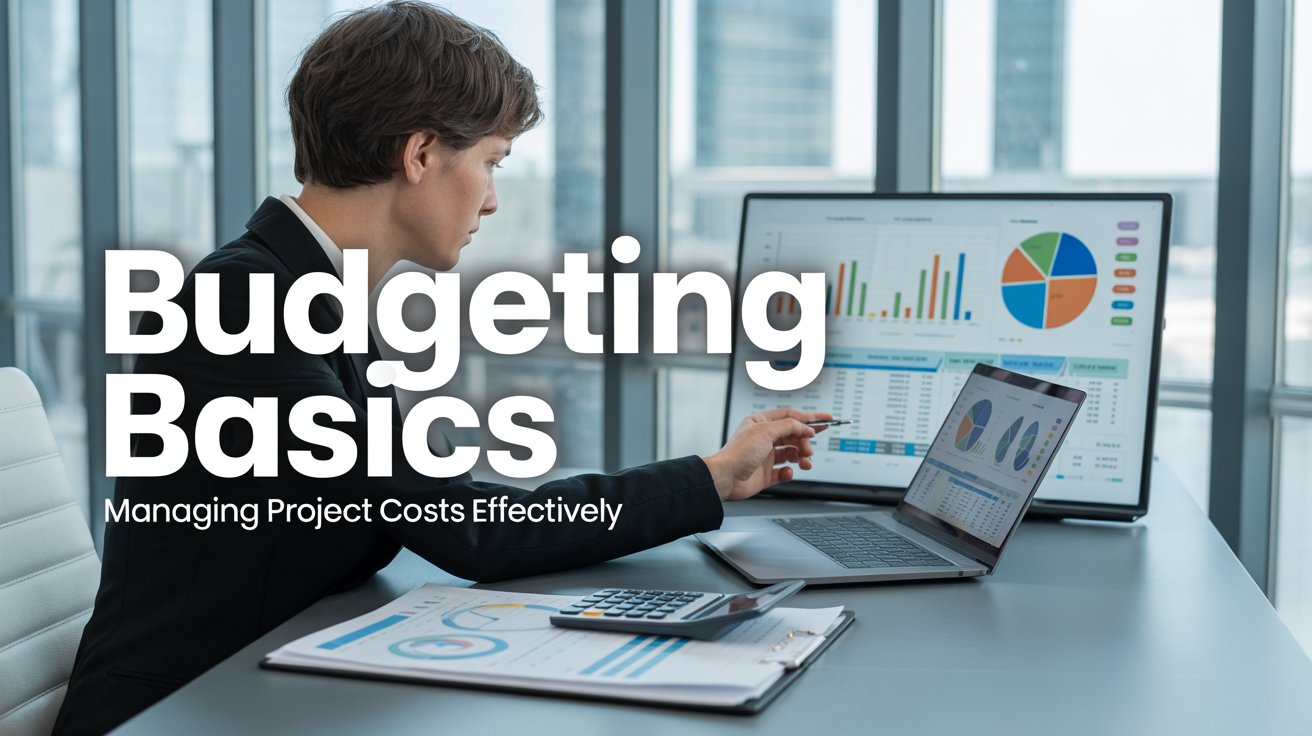
Budgeting Basics: Managing Project Costs Effectively (A Practical Guide for 2026)
Introduction
Every successful project—whether in pharma, IT, construction, manufacturing, or government—depends on one core principle: effective cost management.
Even a perfectly planned project can fail if the budget is unrealistic, poorly tracked, or mismanaged. That’s why managing project costs effectively is one of the most important skills for today’s project managers.
Yet, budgeting remains one of the biggest challenges in project execution. From inaccurate estimates to uncontrolled scope changes, poor budgeting can lead to missed deadlines, broken client relationships, compliance issues, and financial loss.
In this comprehensive guide, we’ll break down the budgeting basics you need to master and show how professionals can become experts at managing project costs effectively—using practical techniques, tools, and proven frameworks.
1. Why Budgeting Matters in Project Management
A budget is more than a number—it’s a control system that ensures projects progress as planned. In 2026, with rising operational costs, inflationary pressures, and global volatility, cost management is more important than ever.
A good project budget helps you:
- Avoid cost overruns
- Track financial performance
- Improve resource allocation
- Manage risks proactively
- Gain stakeholder confidence
- Align project goals with organizational strategy
📊 Statistic: PMI’s “Pulse of the Profession” reported that 45% of failed projects cite budget overruns as the primary reason for failure.
👉 This makes managing project costs effectively the secret weapon of high-performing project managers.
2. Understanding the Basics of Project Budgeting
Before diving into tools and techniques, you must understand what a project budget includes.
A. Types of Costs
- Direct Costs
- Labor
- Materials
- Equipment
- Vendor fees
- Indirect Costs
- Administrative overhead
- Utilities
- Shared resources
- Fixed Costs
- Licensing fees
- Software subscriptions
- Variable Costs
- Overtime
- Raw materials
- Contingency Reserve
- For uncertain or unexpected events
- Management Reserve
- For unknown unknowns
📌 Pro Tip: Always include contingency (5–15%) when managing project costs effectively.
3. Step-by-Step Process for Managing Project Costs Effectively
Step 1: Define the Scope Clearly
Ambiguous scope = unpredictable costs.
Use:
- Work Breakdown Structure (WBS)
- Scope Statement
- Acceptance Criteria
These help ensure no hidden tasks inflate budget mid-project.
Step 2: Estimate Costs Accurately
Common Estimation Techniques
| Technique | When to Use | Example |
|---|---|---|
| Analogous Estimation | When limited data is available | “Last year’s validation project cost $50k, so this one should be similar.” |
| Parametric Estimation | When using measurable units | “$120 per user × 500 users.” |
| Bottom-Up Estimation | For highly detailed projects | Cost of each task calculated individually |
| Three-Point Estimation | For uncertain tasks | (Optimistic + Pessimistic + Realistic) / 3 |
💡 Insight: Bottom-up estimation gives the most accurate results for managing project costs effectively.
Step 3: Create the Project Budget
A solid budget includes:
- Activity costs
- Resource costs
- Contingency & reserves
- Vendor contracts
- Risk buffers
- Cash flow timeline
Use tools like MS Project, Smartsheet, Excel, Power BI, or Primavera.
Step 4: Track Costs Continuously
Real-time monitoring is crucial.
Cost Tracking Methods
- Earned Value Management (EVM)
- Cost Performance Index (CPI)
- Schedule Performance Index (SPI)
- Variance at Completion (VAC)
- Power BI dashboards for live tracking
📊 Example:
A CPI below 1.0 indicates you are over budget.
This helps you stay proactive—not reactive.
Step 5: Manage Changes Effectively
Scope creep is the #1 reason project budgets fail.
Use a Change Control Process:
- Submit Change Request
- Evaluate Cost Impact
- Evaluate Schedule Impact
- Approve/Reject
- Update Budget & Plan
👉 Strong change control = strong cost control.
Step 6: Communicate Cost Updates Regularly
Stakeholders hate surprises.
Use:
- Weekly reports
- Budget dashboards
- Variance analysis
- Risk review meetings
Clear communication builds trust and ensures alignment.
4. Tools to Help You Manage Project Costs Effectively
A. Cost Estimation Tools
- Excel
- Primavera
- MS Project
- ProjectManager.com
- Oracle P6
B. Real-Time Tracking Tools
- Power BI
- Tableau
- Trello (with cost plugins)
- Monday.com
C. Budget Management Tools
- QuickBooks
- Zoho Books
- SAP ERP
- Odoo
5. Best Practices for Managing Project Costs Effectively
✔ Set Clear Milestones
Break the budget into phases for easier tracking.
✔ Track Resource Utilization
Avoid underutilization or overloading.
✔ Monitor Vendor Performance
Delays = cost increases.
✔ Review Budget Weekly
Small variances become big problems quickly.
✔ Build a Risk Register
Identify possible budget threats early.
✔ Evaluate Return on Investment (ROI)
Prioritize tasks that deliver maximum value.
6. Mini Case Study: Pharma Project Cost Management
A pharma company planned a plant validation project with a budget of $1.2M.
Problems Faced:
- Vendor delays
- Scope creep
- Documentation backlog
Solutions:
- Implemented EVM dashboards
- Added 10% contingency buffer
- Introduced daily cost-tracking huddles
- Enforced strict change control
Results:
- Completed 4 weeks early
- Saved 12% of total cost
- Achieved zero audit observations
👉 This is why mastering budgeting basics and managing project costs effectively is essential in regulated industries.
7. Common Budgeting Mistakes & How to Avoid Them
🚫 Underestimating costs
🚫 Ignoring risk buffers
🚫 Not updating the budget regularly
🚫 Poor vendor selection
🚫 Misaligned team expectations
How to Avoid:
- Use detailed estimates
- Maintain contingency
- Review budget weekly
- Conduct vendor audits
- Verify alignment with WBS and scope
8. Quick Checklist for Project Cost Management
✅ Create a detailed WBS
✅ Estimate using at least two techniques
✅ Add contingency + management reserve
✅ Track daily or weekly
✅ Use dashboards for visibility
✅ Enforce scope control
✅ Conduct variance analysis
✅ Report transparently
9. FAQs: Managing Project Costs Effectively
1. What is the hardest part of project cost management?
Accurate estimation and managing scope changes.
2. How much contingency should a project have?
Typically 5–15% depending on project complexity.
3. Do digital tools make cost management easier?
Yes — dashboards and automated reports increase accuracy and transparency.
4. What industries benefit most from strong cost management?
Pharma, IT, construction, manufacturing, healthcare, and engineering.
Conclusion
Managing project budgets isn’t just about numbers—it’s about planning, discipline, communication, and proactive decision-making.
When professionals master budgeting basics and focus on managing project costs effectively, they become more confident, reliable, and successful in leading projects of any scale.
Whether you’re in pharma, tech, or manufacturing, strong cost management is the foundation of strong project management.
🚀 Call to Action:
Want to master budgeting, cost control, and project leadership? Join our Project Management Mastery Program (PMP + Real-world Templates + Tools) and become a top-tier project manager in 2026.

