No products in the cart.
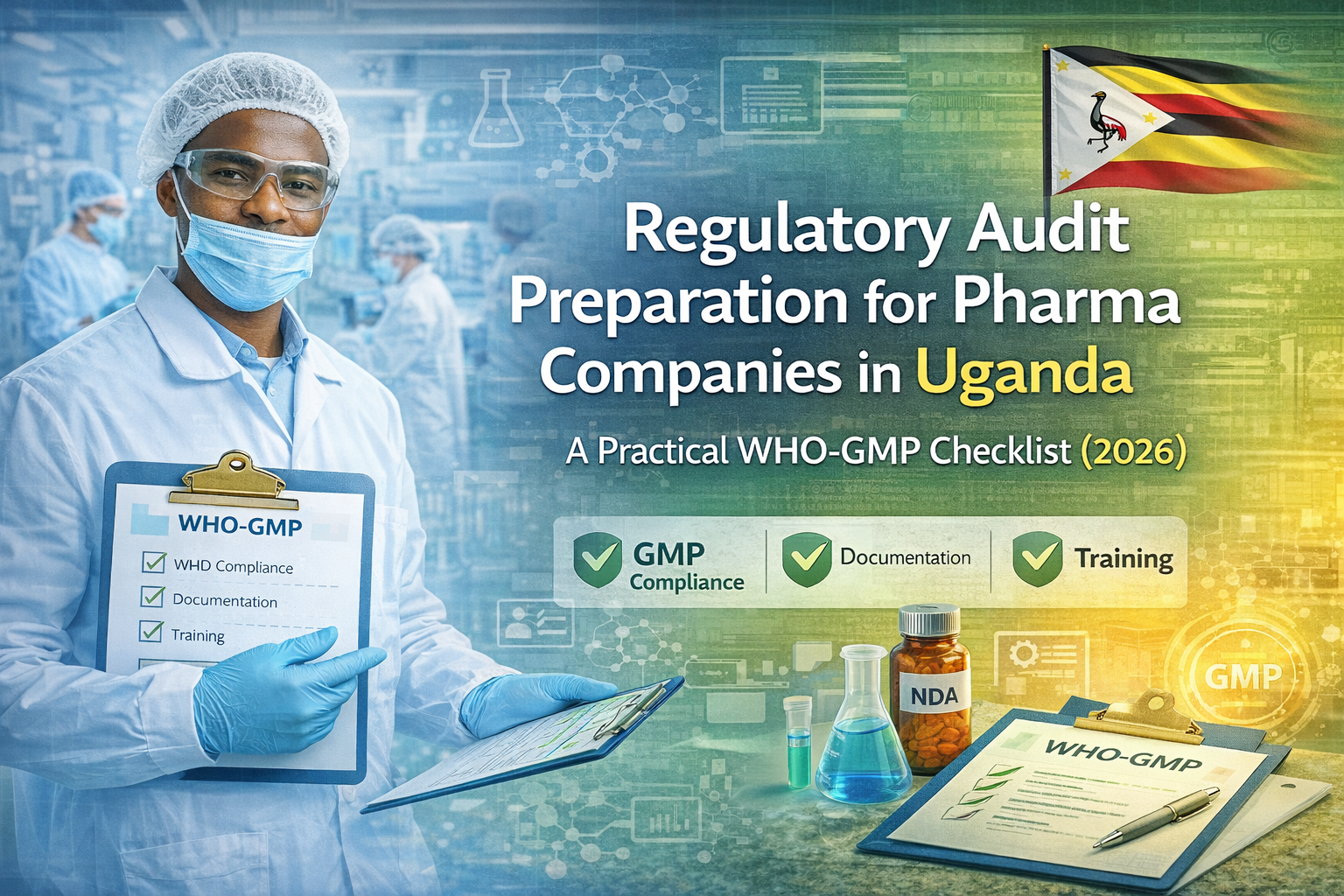
Regulatory Audit Preparation for Pharma Companies in Uganda: A Practical WHO-GMP Checklist (2026)
Introduction: Why Audit Readiness Matters More Than Ever in Uganda
Uganda’s pharmaceutical sector is entering a decisive phase. With increasing local manufacturing, regional exports to East Africa, and heightened scrutiny from regulators, regulatory audit preparation for pharma companies in Uganda has become a strategic business priority not just a compliance task.
WHO-GMP inspections today focus not only on documentation, but also on process maturity, risk management, data integrity, and leadership accountability. Companies that treat audits as last-minute events often face critical observations, import/export restrictions, or loss of credibility.
This blog provides a practical WHO-GMP checklist for 2026, tailored specifically to the realities of Ugandan pharma companies covering what inspectors expect, where companies fail, and how to build sustainable audit readiness.
Understanding the Regulatory Landscape in Uganda
Pharma companies in Uganda typically interact with:
- National Drug Authority (NDA Uganda)
- WHO-GMP inspectors
- Regional regulatory partners (EAC)
- Donor-funded procurement audits
Each audit evaluates not just compliance, but capability and consistency.
Common challenges include:
- Incomplete GMP systems
- Weak audit trails
- Limited trained audit leaders
- Reactive compliance culture
This is why regulatory audit preparation for pharma companies in Uganda must evolve from checklist-based compliance to system-driven readiness.
What WHO-GMP Inspectors Really Look For
WHO-GMP audits typically assess:
1. Quality Management System (QMS)
- Document control
- Deviation & CAPA handling
- Change management
- Management review effectiveness
2. Facility & Utilities
- HVAC qualification
- Cleanroom classification
- Preventive maintenance records
3. Validation & Qualification
- Process validation lifecycle
- Equipment qualification
- Cleaning validation
4. Data Integrity
- ALCOA+ principles
- Audit trails
- Electronic & manual record controls
5. People & Competency
- Training effectiveness
- Role clarity
- Audit behavior on the shop floor
A Practical WHO-GMP Audit Checklist for Uganda (2026)
1. Audit Governance & Ownership
Ask yourself:
- Who owns audit readiness?
- Is it QA-only or cross-functional?
- Are responsibilities documented?
Best practice:
Create a cross-functional audit governance team involving QA, Engineering, Production, and IT.
2. Documentation Readiness
Ensure:
- SOPs are current, approved, and implemented
- Records are legible, contemporaneous, and traceable
- Deviations are closed with effective CAPAs
Common Gap in Uganda:
Good SOPs on paper, weak execution on the floor.
3. Validation & Qualification Discipline
Inspectors frequently cite:
- Inadequate process validation rationale
- Missing requalification schedules
- Poor change impact assessment
Action Tip:
Move from “one-time validation” to lifecycle-based validation.
4. HVAC & Facility Compliance
HVAC is one of the top observation areas.
Checklist:
- URS, DQ, IQ, OQ, PQ available
- Pressure differentials monitored
- Trend reports reviewed periodically
5. Data Integrity Controls
WHO inspectors increasingly focus on:
- Manual data manipulation
- Back-dated entries
- Shared logins
Action Tip:
Train teams on why data integrity matters not just what ALCOA stands for.
6. Training Effectiveness
Inspectors assess:
- Training matrices
- Effectiveness checks
- Role-based competency
Training should not be a checkbox it must be measurable and role-specific.
7. Mock Audits & Gap Assessments
Companies that perform mock audits:
- Reduce critical observations
- Improve audit confidence
- Identify blind spots early
Mock audits should simulate real WHO-GMP behavior, not friendly internal reviews.
Why Many Ugandan Pharma Companies Fail Audits
Despite good intentions, failures often stem from:
- Siloed departments
- Lack of audit leadership
- Poor project execution of remediation plans
- Limited exposure to global audit expectations
This is where structured project management and regulatory mastery become essential.
From Compliance to Capability: The Role of Advanced Training
Modern audit readiness requires professionals who understand:
- Regulatory intent
- Project execution
- Risk-based decision-making
- Digital and data-driven compliance
Advanced, integrated training programs covering regulatory audits, GMP, validation, project management, and digital transformation – help teams move from reactive compliance to proactive excellence Skillup to Scaleup Brochure ATP….
👉 “advanced pharma audit and compliance leadership programs” https://gauravdakshini.com/courses/the-pharma-architect-master-class/
How to Build a 90-Day Audit Readiness Plan
Month 1: Baseline Assessment
- Conduct mock audit
- Identify top 10 gaps
- Assign owners
Month 2: Remediation Projects
- CAPA execution
- SOP updates
- Training refresh
Month 3: Management Review
- Review effectiveness
- Close gaps
- Prepare inspection narrative
Audit readiness is a project, not an event.
FAQs: Regulatory Audit Preparation in Uganda
Is WHO-GMP mandatory for Ugandan pharma companies?
For exports, donor supply, and international credibility—yes.
What is the most common WHO-GMP observation?
Documentation execution gaps and data integrity issues.
How often should mock audits be conducted?
At least once a year, and before any major inspection.
Do small pharma companies need the same level of readiness?
Yes. WHO-GMP expectations apply regardless of company size.
Conclusion: Audit Readiness Is a Leadership Responsibility
In 2026, regulatory audit preparation for pharma companies in Uganda is no longer about surviving inspections—it’s about building trust, scalability, and global acceptance.
Companies that invest in:
- Structured audit systems
- Skilled professionals
- Project-driven compliance
- Continuous upskilling
will consistently outperform those who rely on last-minute fixes.
If your goal is zero-surprise audits and long-term regulatory confidence, the journey starts with capability building—not firefighting.
Strong CTA
Your trusted partner for pharma skills, systems, and solutions.

